Wiki
Hot Mix 5
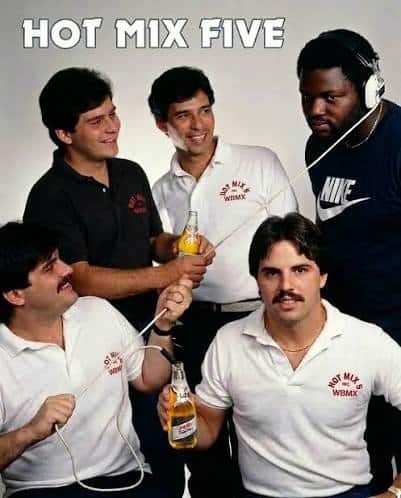
The Hot Mix 5 were a groundbreaking collective of Chicago DJs whose innovative mixing, editing and radio performances helped transform the city’s emerging house‑music movement into a cultural phenomenon. Created in 1981 by WBMX‑FM program director Lee Michaels, the original team consisted of Farley “Funkin’” Keith, Mickey “Mixin’” Oliver, Ralphi “Rockin’” Rosario, Kenny “Jammin’” Jason and Scott “Smokin’” Silz.
Their assignment was to bring the energy and creativity of Chicago’s underground dance clubs to the radio, but what happened next would help change the course of electronic dance music worldwide. Broadcasting from WBMX 102.7 FM in Oak Park, the Hot Mix 5 became the voices of a new musical movement that was developing in Chicago’s neighborhoods and clubs.
The Hot Mix 5 emerged at a pivotal moment in Chicago music history. DJs such as Frankie Knuckles at the Warehouse and Ron Hardy at the Music Box were creating extended, beat‑driven sets that blended disco, funk, soul, European electronic music and emerging independent dance records. The Hot Mix 5 took that club culture and brought it into Chicago homes through their enormously influential WBMX programs, including the Saturday‑night “Saturday Night Live Ain’t No Jive” mix show hosted by Armando Rivera.
Their sets were radically different from conventional radio programming: instead of simply playing one record after another, the DJs manipulated turntables, created edits and remixes, extended instrumental passages and blended records together into continuous, rhythmically driven performances.
The impact was immediate and extraordinary. The Hot Mix 5 gave Chicago listeners access to music that might otherwise have remained confined to the city’s underground clubs, while simultaneously creating a new generation of superstar DJs. Each member brought a distinct personality and musical sensibility to the collective, while their combined work reflected the multicultural character of Chicago itself.
Their broadcasts helped popularize the term and sound of house music, and WBMX became a crucial bridge between the city’s African‑American, Latino, LGBTQ+ and broader dance‑music communities. As Chicago Magazine‘s history of the genre notes, WBMX’s hiring of the original Hot Mix 5 in 1981 brought the Warehouse’s style of mixing into Chicago living rooms every Saturday night.
The individual members went on to have extraordinary careers of their own. Farley “Jackmaster” Funk became one of the most internationally recognized figures in Chicago house, while Mickey Oliver, Ralphi Rosario and Kenny “Jammin’” Jason became important producers and DJs in their own right. Farley’s 1986 recording “Love Can’t Turn Around,” featuring vocalist Darryl Pandy, became the first house single to reach the U.K. Top 10, helping introduce Chicago’s sound to an international audience.
The Hot Mix 5 name itself also evolved into a record label and production identity, extending the group’s influence beyond radio. Over time, members changed, including the addition of Julian “Jumpin’” Perez after Scott Silz’s departure, but the original Hot Mix 5 lineup remains central to the history of Chicago house.
The legacy of the Hot Mix 5 reaches far beyond the records they played or the radio programs they hosted. They helped establish the DJ as an artist, demonstrating that mixing, editing, sequencing and manipulating recorded music could itself be a creative performance. Their WBMX broadcasts became a blueprint for generations of DJs, remixers and electronic‑music producers around the world and helped propel Chicago house from a local underground movement into an international musical language.
Chicago has recognized their contribution with the dedication of “Hot Mix 5 Way” downtown, along with honorary streets recognizing individual members. In 2026, the Hot Mix 5 were inducted into the Illinois Rock & Roll Hall of Fame, recognizing a collective whose groundbreaking work helped make Chicago not only a capital of rock, blues and soul, but also the birthplace of house music — and a global center of DJ culture.