Wiki
American Breed

Jock Hedblade – contributor
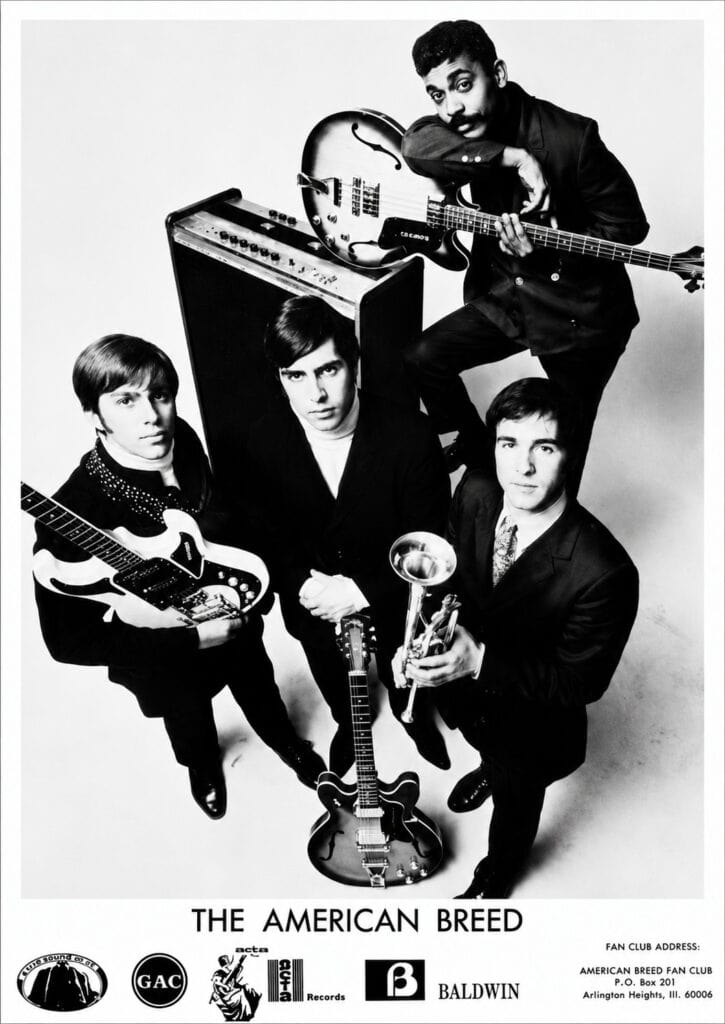
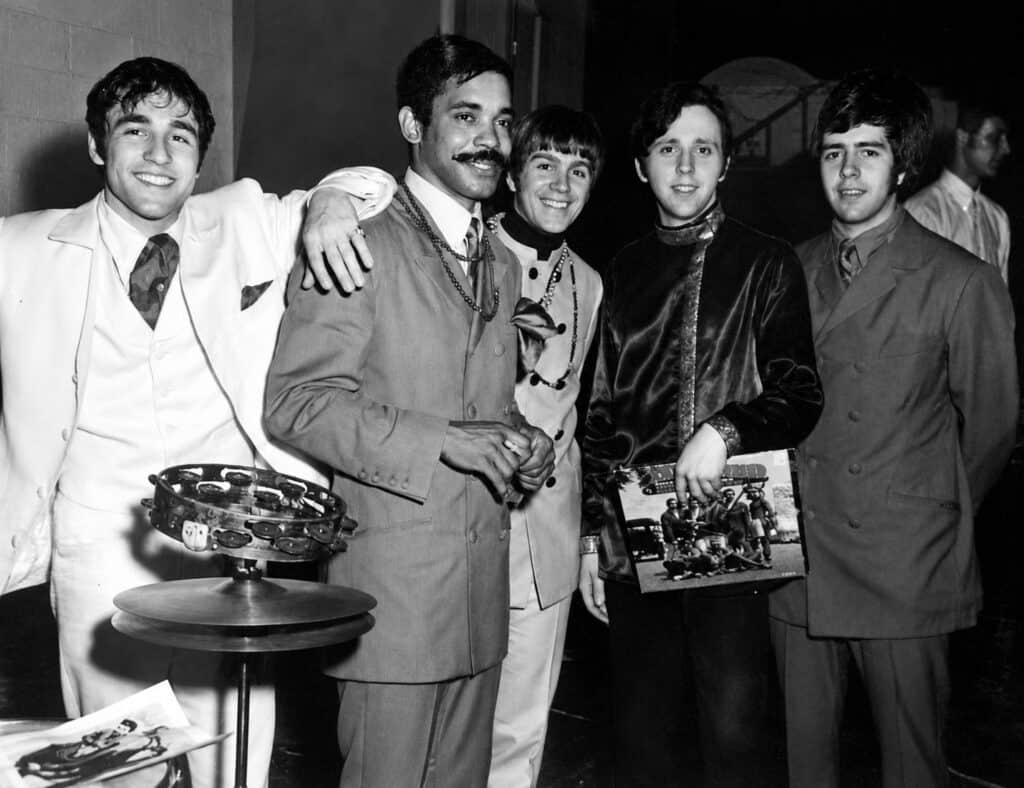
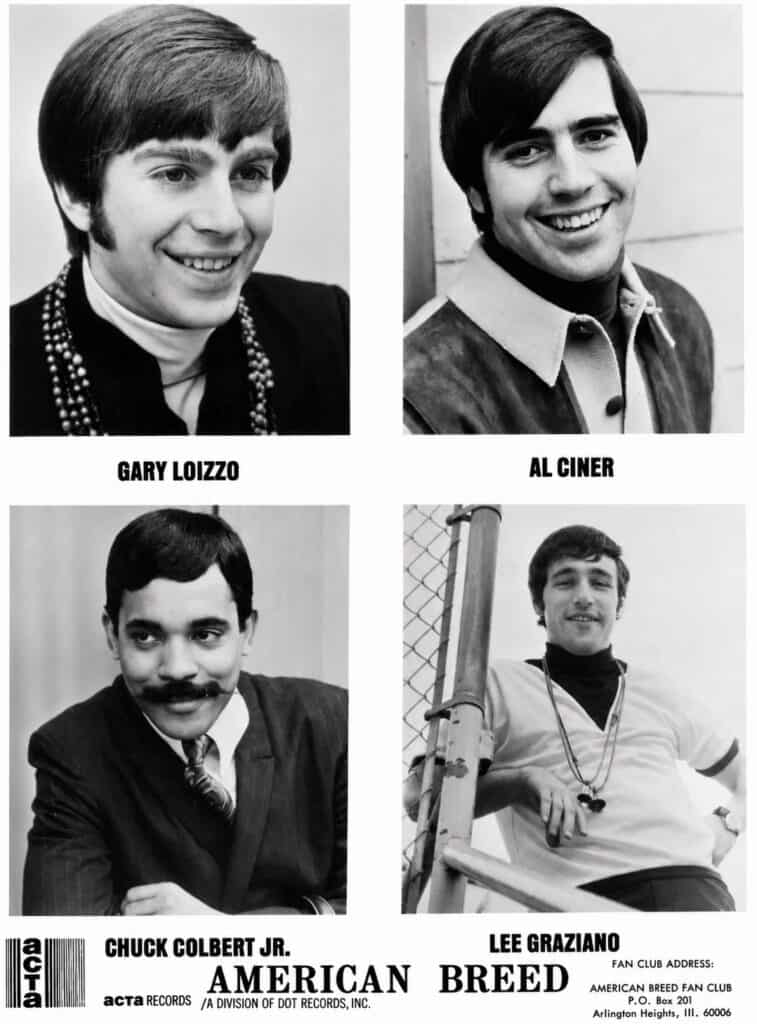
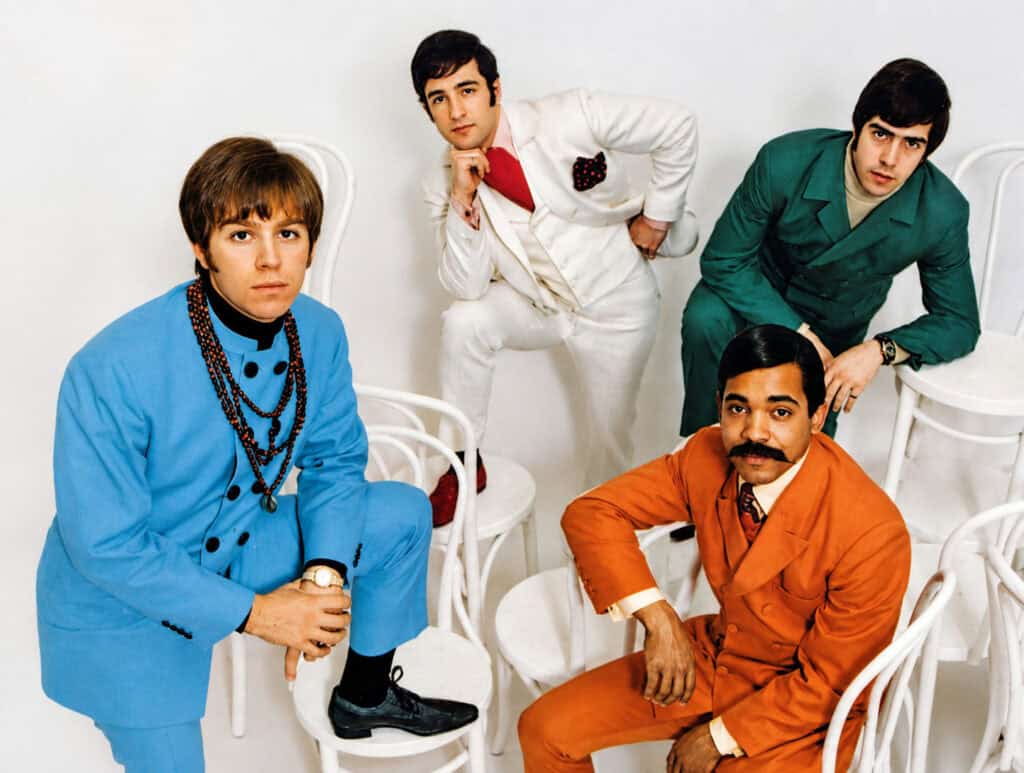
The American Breed stands among the most successful and influential rock bands to emerge from the extraordinary Chicago-area music scene of the 1960s. Although their national success came in the psychedelic and pop-rock era of the late 1960s, the band’s roots were firmly planted in Illinois. Vocalist and guitarist Gary Loizzo, bassist Charles “Chuck” Colbert, guitarist Al Ciner and drummer Lee Graziano came together as young musicians in the Chicago area, initially performing under the name Gary & the Knight Lites. The group developed its sound playing throughout the Chicago region, drawing heavily from the rock, pop and rhythm & blues that defined the city’s vibrant musical culture. Their racially integrated lineup was also notable for its time, reflecting the diverse musical influences of Chicago.
The band’s connection to Chicago’s R&B heritage was particularly significant. Loizzo and Colbert were deeply influenced by the rhythm & blues artists they encountered at legendary Chicago venues, while Colbert had already established himself as an R&B performer with The Daylighters. Meanwhile, The American Breed became part of an extraordinary generation of Chicago-area bands that included The Buckinghams, The Ides of March, The New Colony Six, The Cryan’ Shames and others who helped establish Chicago as one of America’s great centers of popular music. The musicians were not merely part of the national musical movement—they were products of the unique musical ecosystem that existed in Chicago and its surrounding communities.
In January 1967, a remarkable Chicago snowstorm helped change the band’s destiny. Gary & the Knight Lites were introduced to record executive Kenny Myers, who heard their recordings through producer Bill Traut at Universal Recording Corporation in Chicago. Myers signed the group to Acta Records, a subsidiary of Dot Records, and suggested that they adopt a new name. The musicians put a collection of names into a hat and selected The American Breed. Their first national release, “I Don’t Think You Know Me,” was followed by “Step Out of Your Mind,” which climbed to No. 24 on the Billboard Hot 100. Their self-titled debut album was recorded at Chicago’s Universal Recording Corporation, further underscoring that the band’s national breakthrough remained rooted in its hometown recording community.
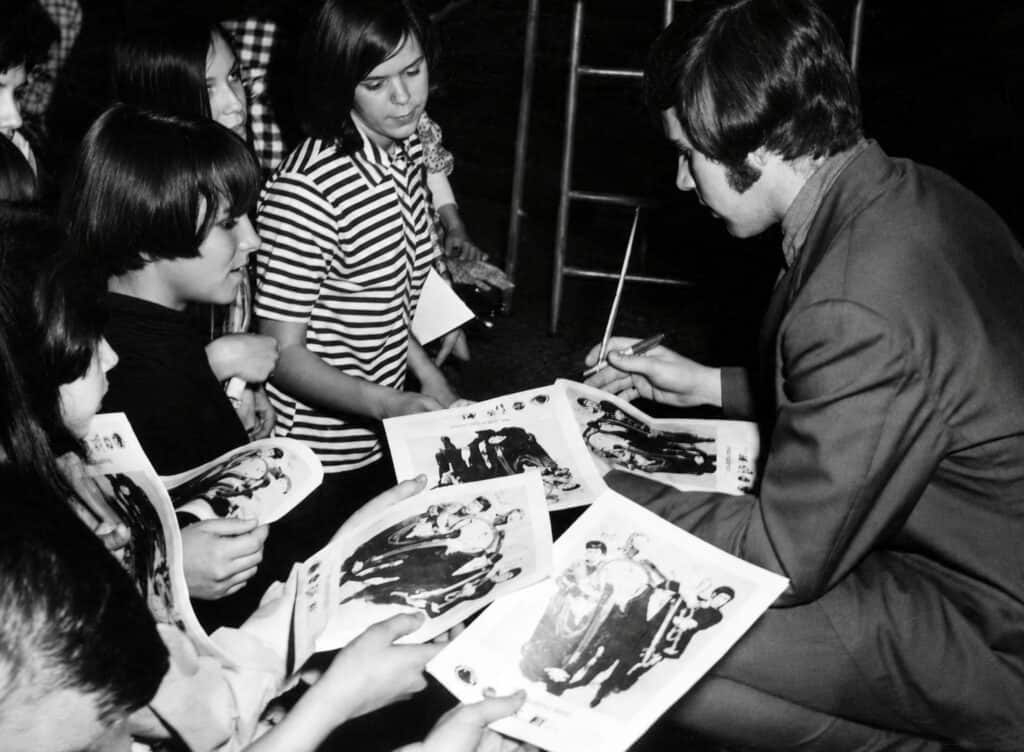
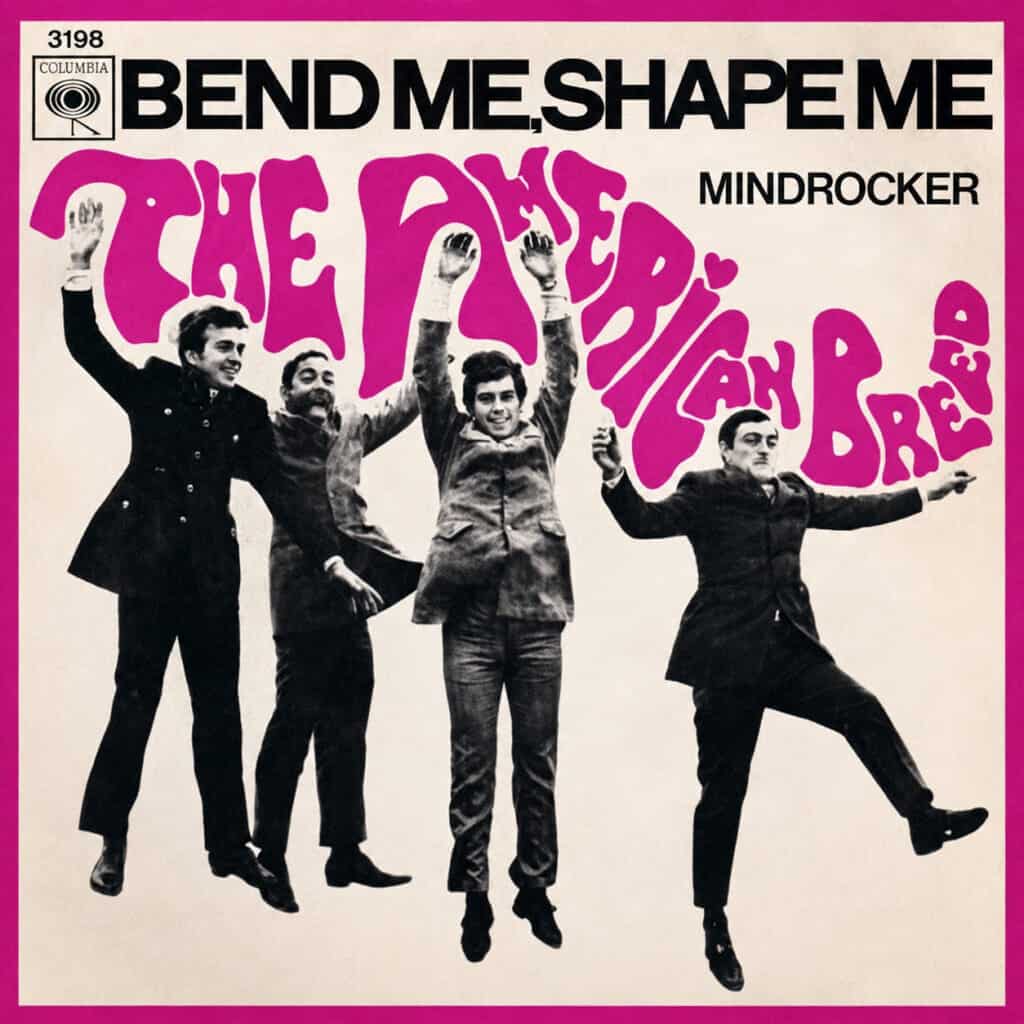
Then came the song that secured The American Breed’s place in rock-and-roll history. Released in late 1967, “Bend Me, Shape Me” became a national sensation in early 1968. The energetic recording reached No. 5 on the Billboard Hot 100, became a million-selling gold record and remains one of the defining pop-rock singles of the 1960s. The band followed it with additional chart success, including “Green Light,” which reached the Billboard Top 40. For a group that had grown up playing around Chicago, the success represented an extraordinary journey—from local teenage musicians to national television, concert tours and the top reaches of the American pop charts.
The American Breed disbanded around 1970, but the story did not end there. Gary Loizzo went on to become one of Chicago’s most respected recording engineers and producers, eventually establishing Pumpkin Recording Studios and working with major artists including Styx, REO Speedwagon, Bad Company, Survivor and others. His engineering and production career earned two Grammy nominations and cemented his place in the broader history of Chicago recording. Other members of The American Breed continued their musical careers, with Chuck Colbert and Lee Graziano eventually becoming part of the evolution of Rufus, the groundbreaking group that would later feature Chaka Khan. The American Breed reunited periodically and continued making appearances around the Chicago area. In 2026, the band was selected for induction into the Illinois Rock & Roll Hall of Fame, an especially fitting honor for a group whose music, musicians and legacy are so deeply woven into the history of Chicago and Illinois rock and roll.